
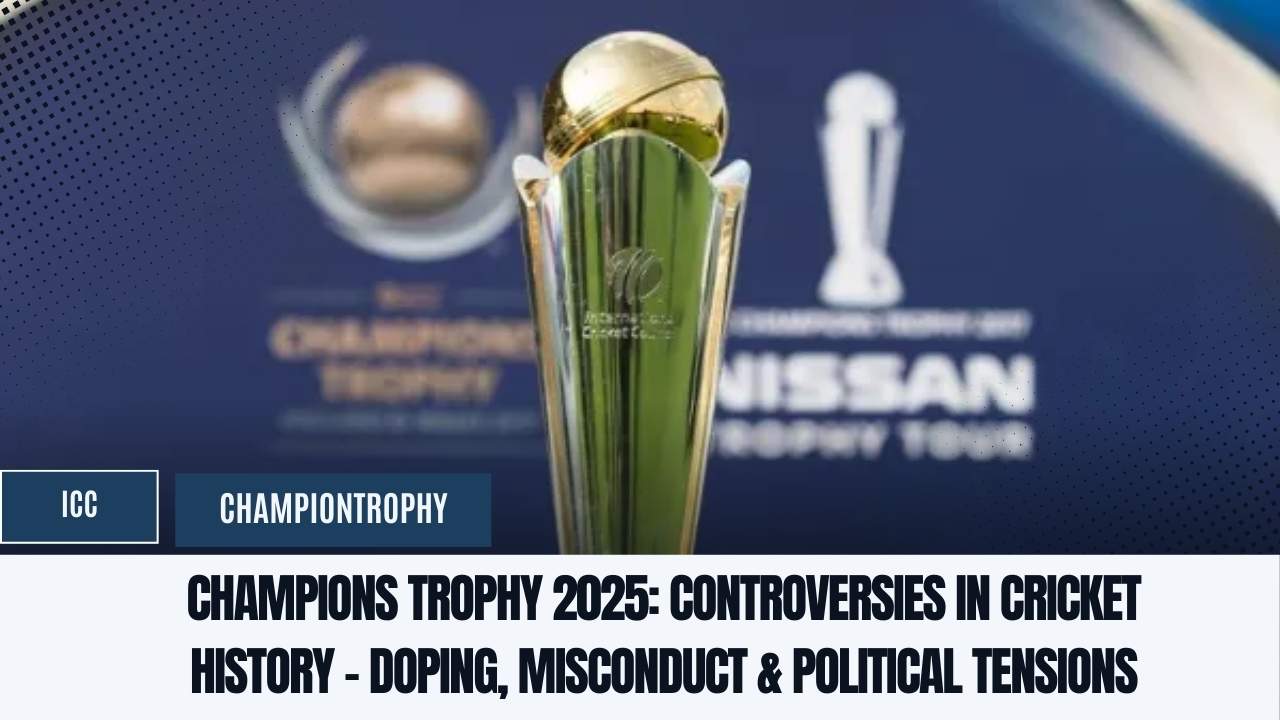
The ICC Champions Trophy, which has been a key cricket tournament since its launch in 1998, has often been surrounded by controversy. From on-field incidents to off-field political tensions, the tournament has seen its fair share of disruptions. With the 2025 edition set to begin on February 19 in Karachi, let’s look back at some of the most significant controversies throughout the tournament’s history.
2006: Major Controversies That Rocked the Tournament
The 2006 Champions Trophy in India was one of the most controversial editions, with a mix of off-field issues and player misconduct.
BCCI’s Concerns About the Tournament
The Board of Control for Cricket in India (BCCI) voiced concerns about the tournament, suggesting that it was more of a financial burden than a valuable event. They called for greater emphasis on the World Cup instead of the Champions Trophy. Adding to the tension were security concerns after the Mumbai bombings in July 2006, which raised questions about the safety of players. Despite these fears, the tournament continued as planned.
Herschelle Gibbs’ Return Amid Legal Trouble
South African cricketer Herschelle Gibbs made his return to India after a six-year absence, fearing arrest due to a match-fixing scandal from 2000. His appearance in India led to further investigations, as Gibbs was questioned by Delhi police, fueling concerns about the integrity of the game.
Doping Scandal: Asif and Shoaib Akhtar Sent Home
Pakistan’s Mohammad Asif and Shoaib Akhtar were sent home from the tournament after both tested positive for banned substances. This issue broke just one day before the tournament’s first match and disrupted Pakistan’s plans, leaving a dark cloud over the competition.
Controversial Behavior from Australia After Their Win
Australia’s behavior following their win in the 2006 final raised significant criticism. Australian players, including Damien Martyn and Ricky Ponting, were called out for their conduct during the trophy presentation. Martyn pushed BCCI President Sharad Pawar off the stage, and Ponting’s impatience was apparent as he rushed the trophy handover. While some dismissed the incident as minor, many, including cricket legend Sachin Tendulkar, found it unpleasant.
2013: More Controversies on and off the Field
The 2013 Champions Trophy, held in England, saw its own share of controversies, involving player misconduct and protests.
David Warner Suspended for Misconduct
Australian cricketer David Warner faced suspension after an altercation with England’s Joe Root following Australia’s loss to England. The incident was widely criticized, leading to a tarnished image for Warner and Australia during the tournament.
Ball-Tampering Allegations
During a match between England and Sri Lanka, former England captain Bob Willis accused a player of ball-tampering. The umpire changed the ball mid-innings, which led to the suspicion. Despite the accusations, England’s coach Ashley Giles denied any wrongdoing, and the controversy remained unresolved.
Pitch Invasion and Protests at the India-Sri Lanka Semi-final
During the semi-final between India and Sri Lanka in Cardiff, protesters interrupted the match by invading the pitch. These disruptions, caused by Tamil activists, led to delays and hindered the match’s flow. After the game, the Sri Lankan team’s bus was delayed due to the ongoing protests outside the stadium.
2025: Geopolitical Tensions and Gender Equality Concerns
The upcoming 2025 Champions Trophy already faces its own controversies, with significant geopolitical and gender-related issues in play.
India and Pakistan’s Political Tensions
Due to political tensions, India refused to play its matches in Pakistan. As a result, India’s fixtures will be held in Dubai, following a hybrid model similar to the one used for the Asia Cup. This decision highlights the ongoing political strain between the two countries, impacting the tournament’s format.
Afghanistan’s Participation Amid Gender Issues
The Taliban’s oppressive stance on women’s rights in Afghanistan created calls for England to boycott their match against Afghanistan. However, the England and Wales Cricket Board (ECB) decided to proceed with the match, emphasizing the importance of international cooperation rather than unilateral actions in response to political issues.